
mPNS: Magnetic Peripheral Nerve Stimulation
What is mPNS, how it helps regulate nerve circuits, and its role in chronic neuropathic, post-traumatic, or post-surgical pain.
mPNS: Magnetic Peripheral Nerve Stimulation
mPNS stands for magnetic peripheral nerve stimulation. It is a non-invasive form of neuromodulation that uses magnetic pulses to stimulate peripheral nerves involved in the transmission and maintenance of chronic pain.
The goal of mPNS is not to mechanically “repair” a joint, tendon, or muscle. The objective is to help regulate pain nerve circuits: from the peripheral nerve to the spinal cord and finally to the brain. You can read more about how neuromodulation works via rTMS.
In simple terms, mPNS treats chronic pain not just as a local symptom, but as a result of dysfunctional communication between the nerve, the muscle, posture, movement, and central pain processing.
What is Magnetic Peripheral Nerve Stimulation?
Magnetic peripheral nerve stimulation is applied externally, without any incision, needle, or implant. The device produces magnetic pulses that can stimulate peripheral nerves and influence the way painful signals are transmitted.
In international literature, mPNS is studied primarily for forms of chronic neuropathic pain, post-traumatic pain, post-surgical pain, and painful peripheral neuropathy. The evidence is promising but remains newer compared to more established forms of neurostimulation. Studies show potential benefits, but proper patient selection is critical. [1, 2, 3, 4]
How does it help regulate pain nerve circuits?
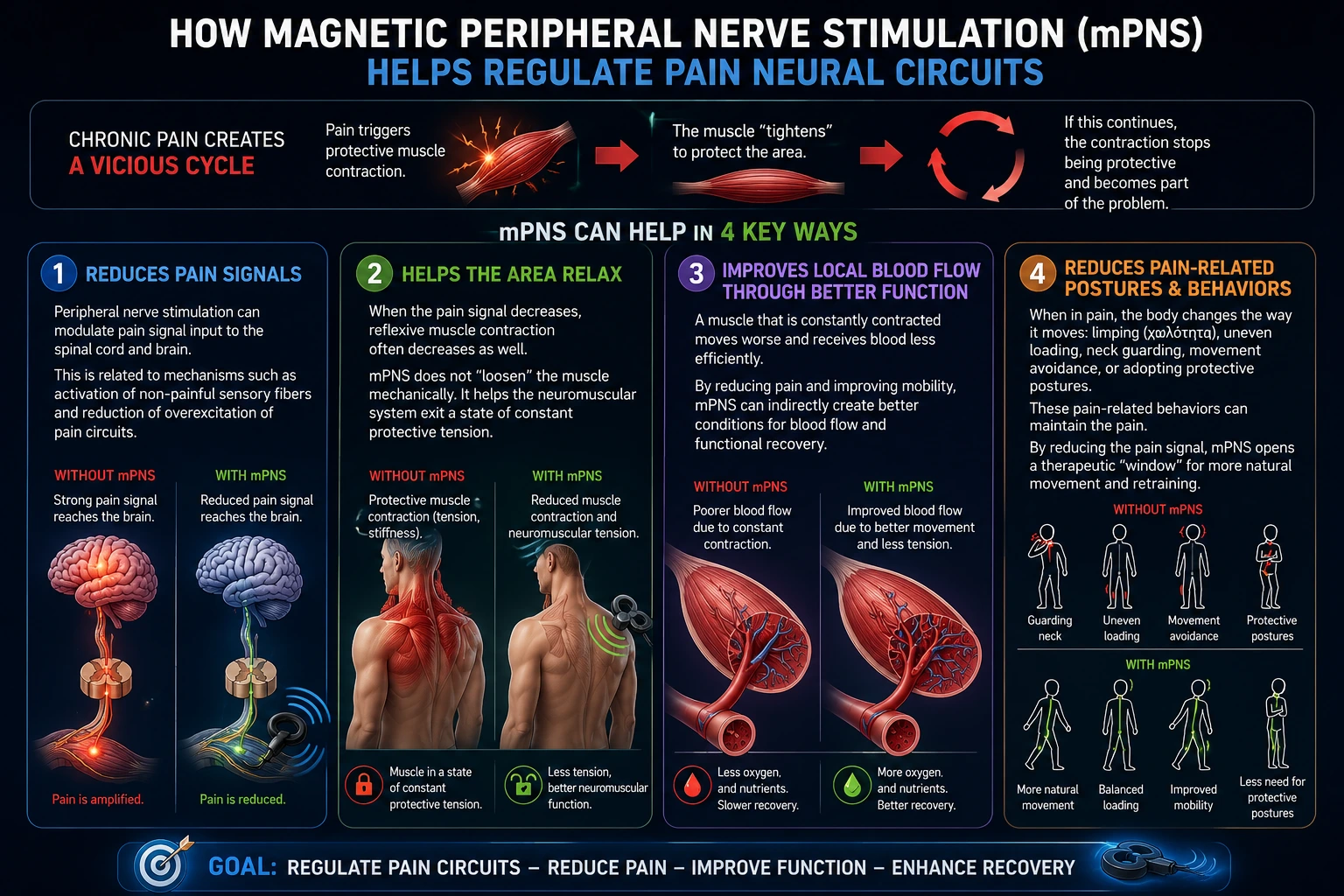
In chronic pain, a vicious cycle is often created:
Initially, pain causes protective muscle contraction. The muscle “tightens” to protect the area. However, if this continues, the contraction ceases to be protective and becomes part of the problem.
Magnetic nerve stimulation can help in four ways:
- Reduction of the painful signal: Stimulation of peripheral nerves can modify the input of pain signals to the spinal cord and brain. This is related to mechanisms such as the activation of non-painful sensory fibers and the reduction of over-excitation in pain circuits. [5]
- Relaxation of the area: When the pain signal is reduced, the reflex muscle contraction is often reduced as well. This does not mean that mPNS mechanically “loosens” the muscle. It means it can help the neuromuscular system exit a state of permanent protective tension.
- Better local blood circulation through improved function: A muscle that remains constantly contracted may move poorly and have less effective blood circulation. By reducing pain and improving mobility, better conditions for blood flow and functional recovery can be indirectly created.
- Reduction of antalgic postures and behaviors: When a patient is in pain, they change the way they move: limping, loading one side, tightening the neck, avoiding movements, or holding protective postures. These antalgic behaviors can sustain the pain. If mPNS reduces the painful signal, it opens a therapeutic “window” for more normal movement and retraining.
In which cases of chronic pain can it be used?
mPNS is most logical when the pain is neuropathic, post-traumatic, post-surgical, or chronic and resistant in nature. Read more about Chronic Pain treatment with rTMS.
It can be evaluated in cases such as:
- Chronic neuropathic pain.
- Pain after injury.
- Pain after surgery.
- Painful peripheral neuropathy.
- Chronic pain with intense muscle contraction.
- Chronic pain with avoidance of movement and antalgic postures.
- Pain that persists despite conventional conservative treatment.
It is not a treatment for every type of pain. If there is severe mechanical damage, active inflammation, joint instability, fracture, rupture, or neurological deficit, these must be evaluated first.
Contraindications and points of attention
Treatment with mPNS should only be performed after medical evaluation. Particular care is needed in patients with:
- Pacemaker or implantable defibrillator.
- Implanted electronic devices, such as drug pumps, neurostimulators, or cochlear implants.
- Metal or electromagnetically sensitive implants near the application area.
- History of epileptic seizures or severe neurological disease.
- Pregnancy (limited data).
- Active infection or open wound in the area.
What does mPNS NOT do?
mPNS does not mechanically fix a joint, does not realign a disc, does not treat a tendon rupture, and does not replace orthopedic, neurological, or physiotherapeutic evaluation. Its most appropriate use is as part of a comprehensive plan for managing chronic pain.
mPNS and rTMS: two levels of neuromodulation
mPNS and rTMS belong to the broader family of neuromodulation but are applied at different levels of the nervous system. mPNS targets the periphery, while rTMS primarily targets brain circuits. Learn more about rTMS Cost and Procedure.
Frequently Asked Questions about mPNS
- Is it invasive? No, it is applied externally.
- Is it the same as TENS? No, mPNS uses magnetic pulses for deeper stimulation.
- Does it help with muscle contraction? Yes, indirectly by reducing the pain signal.